
Recliner Living Room Symmetry: The Complete Balanced Layout Guide
Symmetry is one of the most powerful tools in interior design — and it works beautifully with recliners. Learn how to arrange paired recliners, align focal points, and balance visual weight so your living room feels calm, intentional, and effortlessly comfortable.
What Is Recliner Living Room Symmetry?
Recliner living room symmetry is the practice of arranging recliner seating, side tables, lighting, and decor so that the left and right sides of the room mirror or balance each other around a central axis. In a symmetrical recliner layout, the eye reads the room as a single, calm composition rather than a collection of unrelated pieces.
Symmetry in a recliner setting is not about rigid perfection. It is about visual balance — giving both sides of the room similar weight, height, and presence so that no single element pulls the eye off-center. Because recliners are large, deep, and visually heavy pieces, they respond especially well to symmetrical arrangements. A pair of matching recliners flanking a console table, for example, instantly creates a sense of order that a random mix of seating rarely achieves.
If you are still deciding which seating format suits your space, it helps to review the broader recliner style and design hub before committing to a layout. Symmetry is one design strategy among several, and it works best when matched to the proportions of your room and the type of recliner you own.
Why Symmetry Works So Well With Recliners
Recliners are not ordinary chairs. They are deeper, taller, and often heavier than standard seating, and they demand clearance behind and in front when fully extended. That physical presence makes them ideal candidates for symmetrical design, for several reasons:
- Visual weight balancing: A recliner is a substantial object. Placing two recliners of similar size on opposite sides of a focal point balances their mass so the room does not feel lopsided.
- Clearance planning: Symmetrical layouts make it easier to calculate wall clearance and footrest extension space, because both sides follow the same rules.
- Conversation flow: Facing or angled paired recliners create natural sightlines for conversation, which is especially useful in family living rooms.
- Calm and order: Symmetry reduces visual noise. In a room dedicated to rest and relaxation, that calm matters.
- Easier styling: When the layout is balanced, decorating becomes simpler — matching side tables, twin lamps, and paired cushions fall into place naturally.
For rooms that already lean toward a formal or traditional look, symmetry reinforces the architecture. For more relaxed spaces, symmetry provides a quiet backbone that keeps the room from feeling cluttered. Either way, a well-planned symmetrical recliner layout tends to photograph well and live well.
Types of Symmetry for Recliner Layouts
Not all symmetry looks the same. Understanding the main types helps you choose the right approach for your room's size, shape, and function.
1. Bilateral (Mirror) Symmetry
This is the classic form: the left side of the room mirrors the right side around a central axis. A pair of matching recliners on either side of a fireplace, with identical side tables and lamps, is a textbook bilateral arrangement. It is the strongest and most formal type of symmetry, and it works best in rooms with a clear central feature.
2. Radial Symmetry
Radial symmetry arranges seating around a central point, such as a round coffee table or a circular rug. Four recliners or two recliners plus a loveseat can be positioned at equal angles around the center. This layout encourages conversation and works well in square or circular rooms.
3. Approximate (Soft) Symmetry
Approximate symmetry keeps the overall balance but allows small differences between the two sides. One side might have a floor lamp while the other has a table lamp of similar height. The room still reads as balanced, but it feels less rigid and more collected over time. This is often the most practical choice for real homes.
4. Asymmetrical Balance
Strictly speaking this is the opposite of symmetry, but it is worth understanding because many rooms need it. Here, a large recliner on one side is balanced by a group of smaller elements on the other — a side table, a plant, and a floor lamp clustered together. The visual weight is equal even though the shapes differ. If your room cannot support true symmetry, asymmetrical balance is the fallback.
Bilateral Symmetry
Mirror-image layout. Formal, calm, best for rooms with a strong central focal point.
Radial Symmetry
Seating arranged around a central point. Sociable and ideal for square or round rooms.
Approximate Symmetry
Balanced but not identical. The most livable option for everyday family rooms.
Asymmetrical Balance
Different shapes, equal visual weight. A useful fallback for awkward or narrow rooms.
Aligning Recliners With a Focal Point
Symmetry needs an anchor. In most living rooms, that anchor is a focal point: a fireplace, a large window, a television, or a statement piece of art. Your recliners should be arranged around that focal point, not competing with it.
The standard approach is to place the focal point on the room's central axis, then position your recliner seating so that the primary viewing or facing angle points toward it. A single recliner may sit directly opposite the focal point, or a pair of recliners may flank it at equal distances. Side tables, lamps, and artwork then mirror each other on either side.
When the focal point is off-center — common in open-plan homes — you have two options. You can create a secondary axis around the focal point and build symmetry there, or you can accept that the room needs asymmetrical balance instead. Trying to force perfect symmetry onto an off-center focal point usually looks worse than embracing a balanced asymmetry. For more on this, see the guide to recliner focal point design.
Paired Recliners and Twin Seating
The most direct way to achieve symmetry with recliners is to use a pair of matching or closely matched recliners. Paired recliners instantly create a balanced composition and are one of the most reliable symmetrical layouts in interior design.
There are several ways to pair recliners effectively:
- Two single recliners side by side: Place them with a shared side table or console between them, angled slightly toward each other or toward the focal point.
- A two-seater recliner sofa: A single piece provides built-in symmetry and is often the simplest solution for smaller rooms. Browse options in the 2-seater recliner sofa guide.
- Two matching recliners flanking a console: This is the most formal arrangement and works well in front of a fireplace or large window.
- A pair of recliners with a shared ottoman: The ottoman acts as a central anchor, reinforcing the symmetry.
When pairing recliners, pay attention to scale. Two recliners of similar height and width balance each other; a large recliner next to a small one will always look unbalanced, no matter how carefully you style it. If you cannot find identical models, choose two that share the same general silhouette and upholstery tone. A matching pair in a mid-range or premium tier will usually read more harmoniously than two mismatched entry-level pieces.
For larger rooms, a reclining sofa set can be arranged symmetrically with a central coffee table and matching end tables. If you are working with a full set, the recliner sofa set for living room guide covers how to position multi-piece configurations without losing balance.
When Symmetry Needs a Gentle Break
Perfect symmetry can feel cold or museum-like if taken too far. The best symmetrical living rooms include small, deliberate asymmetries that keep the space feeling lived-in. Think of these as "symmetry breakers" — they soften the layout without destroying its balance.
- A single accent chair: Adding one chair at a slight angle breaks the mirror effect while still respecting the overall balance.
- Asymmetric throw pillows: Matching pillows on both sides look formal; mixing patterns on one side only adds personality. See recliner throw pillow styling for ideas.
- One taller lamp: A slightly taller lamp on one side, paired with a lower table lamp on the other, keeps balance while avoiding stiffness.
- A living plant: A plant on one side, balanced by a similar-height sculpture or stack of books on the other, adds organic asymmetry.
- Art placement: A single large artwork centered above the focal point can be balanced by a gallery cluster on a side wall. Explore recliner wall decor for layout ideas.
The rule of thumb: keep the large elements symmetrical and allow the small elements to vary. The recliners, side tables, and major lighting should mirror each other. Cushions, books, plants, and accessories can differ. This gives you the calm of symmetry with the warmth of a real home.
Symmetry in Small and Open-Plan Rooms
Symmetry is not just for large formal living rooms. In fact, it can be a secret weapon in small and awkward spaces, because it makes a room feel intentional rather than cramped.
Small Apartments and Narrow Rooms
In a small living room, full bilateral symmetry may be impossible. Instead, use a vertical symmetry: place a single recliner against one wall and balance it with a matching side table, lamp, and artwork on the opposite side. The eye still reads balance, but the footprint stays compact. A wall-hugger recliner or a slim two-seater works especially well here, since it needs less clearance behind it. The small apartment recliner solutions guide goes deeper into space-saving options.
Open-Plan Living Areas
In open-plan homes, the living area often lacks walls to anchor symmetry. The solution is to create a zoning axis: define the living zone with a rug, then build symmetry within that zone. A pair of recliners facing each other across a coffee table, with matching rugs and lighting, creates a balanced island within a larger space. This approach is covered in more detail in the open plan living recliner zoning guide.
In both cases, the key is to define the boundary of the symmetrical zone first, then arrange the recliners and supporting furniture within it. Without a clear boundary, symmetry has nothing to hold onto.
Common Symmetry Mistakes to Avoid
Symmetry is simple in principle but easy to get wrong in practice. These are the most common pitfalls:
| Mistake | Why It Hurts the Layout | Better Approach |
|---|---|---|
| Mismatched recliner sizes | One side feels heavier, breaking visual balance | Choose recliners of similar height, width, and depth |
| Forcing symmetry around an off-center focal point | The room looks tilted and awkward | Use approximate symmetry or asymmetrical balance instead |
| Ignoring recliner clearance | Footrests collide with furniture or walls when extended | Measure extension depth before finalizing placement |
| Over-matching every object | The room feels stiff and showroom-like | Keep large pieces symmetrical, vary small accessories |
| Blocking the natural pathway | Traffic flow becomes awkward and the room feels cramped | Respect the recommended recliner pathway width |
| Placing recliners in a corner with no balance | The corner feels isolated and the room feels unbalanced | Pair the corner recliner with a matching element opposite, or use corner nook styling |
One more subtle mistake: treating symmetry as a one-time decision. Living rooms evolve. A recliner gets replaced, a lamp moves, a new rug arrives. Re-check your balance every time a major piece changes, and adjust the supporting elements to restore equilibrium.
Symmetry Setup Checklist
Use this checklist before and after arranging your recliner living room. It covers the practical and visual steps that make symmetry work.
- Identify the focal point. Decide what the room faces — fireplace, TV, window, or artwork — and mark the central axis.
- Measure the room. Note the width, length, and any architectural features that affect placement.
- Measure your recliners. Record width, depth, and full recline extension so you know how much clearance is needed.
- Choose the symmetry type. Bilateral, radial, or approximate — pick one and commit to it.
- Position the primary recliner(s). Start with the largest piece and place it on the central axis or facing the focal point.
- Mirror the opposite side. Add a matching recliner, sofa, or balanced grouping on the other side.
- Add matching side tables. Keep them the same height and roughly the same width for visual consistency.
- Balance the lighting. Two similar lamps or one lamp plus one similar-height accent keeps the vertical rhythm even.
- Layer with a rug. A rug defines the symmetrical zone and ties the seating together.
- Add controlled asymmetry. Introduce one or two small differences — a plant, a cushion, a book stack — to keep the room from feeling too rigid.
- Walk the room. Enter from every doorway and check whether the balance holds from each viewpoint.
- Test the recline. Extend every recliner fully and confirm nothing collides.
Frequently Asked Questions
Does a recliner living room have to be perfectly symmetrical?
No. Perfect symmetry is only one option. Approximate symmetry and asymmetrical balance often work better in real homes, especially in small or open-plan rooms. The goal is visual balance, not mathematical precision.
Can I use symmetry with only one recliner?
Yes. A single recliner can be balanced by a matching chair, a side table with a lamp, or a grouping of smaller elements on the opposite side. The recliner does not need a twin — it needs a counterweight of similar visual mass.
How much space do I need between two symmetrical recliners?
Leave enough room for a side table or console between them, typically a narrow table of consistent width. Also ensure each recliner has full clearance to recline without the footrests overlapping the shared table. Check your specific model's extension depth before finalizing.
Is symmetry better for small rooms or large rooms?
Both, but for different reasons. In small rooms, symmetry reduces visual clutter and makes the space feel intentional. In large rooms, it anchors seating groups and prevents the room from feeling scattered. The type of symmetry you choose may differ, but the principle applies to both.
How do I add symmetry without making the room look boring?
Keep the large elements balanced and vary the small ones. Matching recliners and side tables provide order; mismatched cushions, a single accent chair, a living plant, or a slightly different lamp height provide personality. The contrast between order and variation is what makes symmetrical rooms feel warm rather than rigid.
What if my room has an off-center window or fireplace?
Create a secondary axis around the focal point rather than forcing the room's structural center. In many cases, approximate symmetry centered on the focal point looks better than strict bilateral symmetry centered on the room. Alternatively, use asymmetrical balance to equalize the visual weight on both sides.
Ready to Bring Balance to Your Living Room?
Symmetry is one of the most reliable ways to make a recliner living room feel calm, intentional, and comfortable. Apply the principles in this guide, and your space will reward you every day.
Explore Our Recliner Guides & RecommendationsRecommended Recliners for Symmetrical Living Room Layouts
⚠️ AFFILIATE DISCLOSURE: This website contains affiliate links. As an affiliate Associate, we earn from qualifying purchases. If you make a purchase through these links, we may receive a small commission at no additional cost to you. Read our full affiliate policy.

OLIXIS Recliner Chair, Reclining Sofa Chair with 3 Adjustable Angles | Fabric Sofa Chair Seat, Home Theater Seating with Lumbar Support, Footrest for Living Room, Recliners, Bedroom, Gray
Check price on Amazon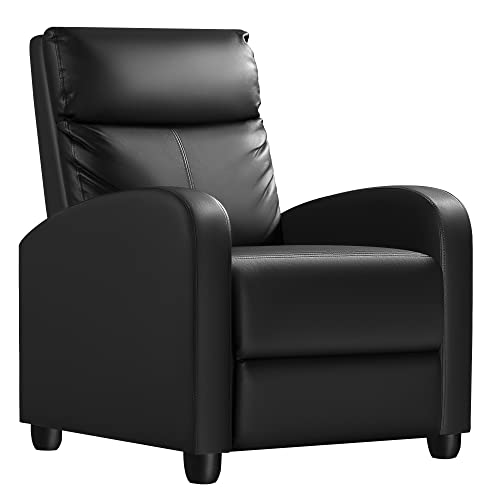
Homall Recliner Chair, Recliner Sofa PU Leather for Adults, Black Recliners | Home Theater Seating with Lumbar Support, Reclining Sofa Chair for Living Room
Check price on Amazon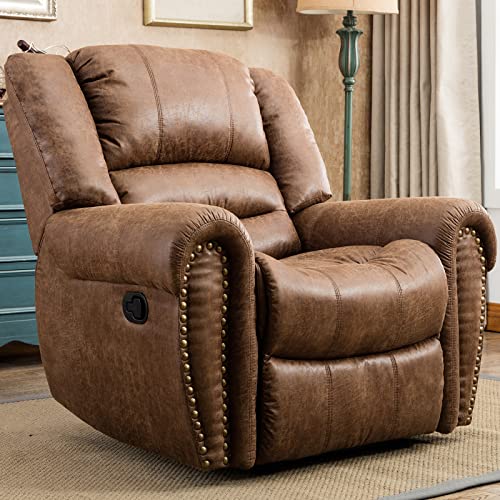
CANMOV Leather Recliner Chair, Classic and Traditional Manual Recliner Chair with Comfortable Arms and Back Single Sofa for Living Room, Nut Brown
Check price on Amazon
BOSMILLER Recliner Loveseat with Cup Holders for Living Room, 2 Seat Manual Loveseat Recliner with Side Pocket
Check price on Amazon
OLIXIS Recliner Chair, Reclining Sofa Chair with 3 Adjustable Angles | Fabric Sofa Chair Seat, Home Theater Seating with Lumbar Support, Footrest for Living Room, Recliners, Bedroom, Black
Check price on Amazon
OLIXIS Recliner Chair, Reclining Sofa Chair with 3 Adjustable Angles | Fabric Sofa Chair Seat, Home Theater Seating with Lumbar Support, Footrest for Living Room, Recliners, Bedroom, Beige
Check price on Amazon
Korser Power Recliner with Wheels, Small Recliners for Small Spaces for Adults, Electric Recliner Chair with Massage & Heat, USB & Type-C Port, Fabric Recliner Chair for Living Room, Dark Grey
Check price on Amazon