
Open Plan Living Recliner Zoning
Transform your expansive open plan space into distinct, functional comfort zones with strategic recliner sofa placement. Learn professional zoning techniques that maximize both style and relaxation.
EXPLORE ZONING STRATEGIESWhy Recliner Zoning Matters: Open plan living spaces offer wonderful flexibility, but without proper zoning, even the most beautiful recliner sofa can feel lost in a sea of undefined space. Strategic zoning creates intimate conversation areas, dedicated relaxation corners, and seamless flow between living, dining, and entertainment zones—all while preserving the airy openness that makes open plan living so appealing.
Understanding Open Plan Living Challenges
Open plan living has become the hallmark of modern home design, offering abundant natural light, flexible entertaining spaces, and a sense of freedom that closed-off rooms simply cannot match. However, this architectural openness presents a unique challenge: how do you create cozy, functional areas for relaxation without sacrificing the spacious feel that drew you to the layout in the first place?
The answer lies in intelligent zoning—the art and science of dividing large, open spaces into distinct functional areas using furniture placement, area rugs, lighting, and strategic visual cues. When done well, zoning transforms a cavernous open plan into a collection of intimate, purposeful zones that each serve a specific function while contributing to the overall harmony of the space.
For recliner owners, zoning becomes particularly important because recliners require clearance for full extension. Unlike static sofas that can be pushed flush against walls, recliners need breathing room to function properly. This guide will walk you through professional zoning strategies specifically tailored for open plan living rooms featuring recliner sofas, helping you create a space that's both beautiful and functional. For foundational design principles, explore our recliner style and design hub.
Core Recliner Zoning Strategies for Open Plan Living
1. Anchor Zones with Area Rugs
The single most effective zoning tool for open plan living is the area rug. A well-chosen rug visually defines a zone, creating an invisible boundary that tells the eye "this area is for relaxation" without adding walls or dividers that would compromise openness. For recliner zones, select a rug large enough to accommodate not just the recliner itself but also the full extension space in front of it.
When placing your recliner sofa on an area rug, ensure the rug extends at least 24 inches beyond the front edge of the fully reclined footrest. This prevents the recliner from looking like it's floating off the edge of the zone and provides visual weight that anchors the furniture. Consider rugs with subtle patterns or textures that add warmth without overwhelming the open plan aesthetic. A warm neutral recliner scheme pairs beautifully with textured natural fiber rugs.
2. Use Furniture Backs as Room Dividers
In open plan living, the backs of sofas and recliner sectionals can serve as natural room dividers, creating distinct zones without blocking sightlines. Position a sectional sofa with electric recliners with its back facing the dining area or kitchen, and you've instantly created a living zone boundary. This technique works particularly well because it provides a sense of enclosure for the recliner zone while maintaining the open flow between areas.
For maximum effectiveness, choose a reclining sofa that doesn't look like a recliner from the back—one with finished upholstery on all sides and a clean silhouette. This ensures the dividing function looks intentional and polished rather than making the back of your furniture an eyesore for adjacent zones.
3. Create Pathway Widths That Respect Recliner Clearance
Open plan living requires careful attention to traffic flow, and recliners add complexity because they need clearance both for extension and for people to walk around when fully reclined. The general rule for open plan pathways is 36 to 48 inches of clear walking space. However, when a recliner is part of the equation, you need to account for the extended footrest, which can add 24 to 36 inches to the furniture's footprint.
To calculate proper clearance, measure from the back of the recliner to the front of the fully extended footrest, then add your desired pathway width. For a recliner that extends 30 inches, you'd need a minimum of 66 to 78 inches from wall to the next furniture piece or zone boundary. Our detailed recliner pathway width guide provides exact measurements for various recliner types and configurations.
4. Layer Lighting to Define Zones
Lighting is an often-overlooked zoning tool that works beautifully in open plan spaces. While overhead lighting illuminates the entire room uniformly, layered lighting creates pools of light that naturally define zones. For your recliner zone, consider a floor lamp positioned behind or beside the recliner, or a pendant light hung lower over a side table if your ceiling height allows.
The key is to create a visual "bubble" of light around your recliner area that distinguishes it from adjacent zones. In the evening, when you dim the overhead lights and turn on your recliner zone lighting, the space instantly transforms into a cozy retreat. This technique pairs wonderfully with recliner color mood effects—warmer bulb temperatures in relaxation zones, cooler in task areas.
5. Establish Focal Points Within Each Zone
Every well-designed zone needs a focal point that draws the eye and gives the space purpose. In a recliner zone, the focal point might be a television, a fireplace, a large window with a view, or even a piece of art positioned at seated eye level. The recliner or recliner sofa should be angled toward this focal point, with secondary seating arranged to create conversation-friendly angles.
In open plan living, multiple focal points can coexist as long as each zone has its own primary anchor. A theater recliner sofa zone might focus on a screen, while an adjacent conversation zone might center on a coffee table arrangement. Our guide to recliner focal point design explores this concept in depth.
Recommended Recliner Sofas for Open Plan Living
⚠️ AFFILIATE DISCLOSURE: This website contains affiliate links. As an affiliate Associate, we earn from qualifying purchases. If you make a purchase through these links, we may receive a small commission at no additional cost to you. Read our full affiliate policy.

Eonix Dual Motor Zero Gravity Power Recliner with Heat & Massage, Navy Blue | Infinite Position, Home Function, Lay Flat, Independently Controlled Backrest and 3.1" Extended Footrest, Side Pockets
Check price on Amazon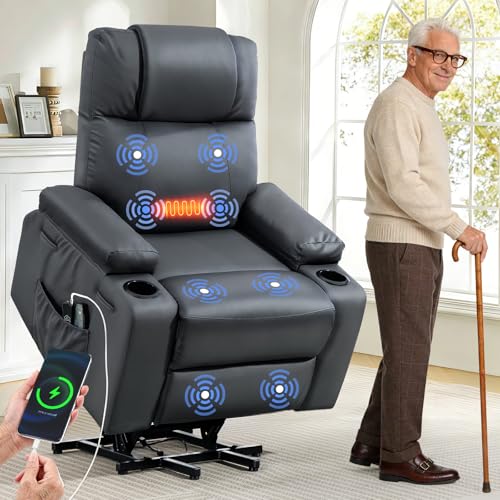
Power Lift Recliner Electric Chair for Elderly with USB Charge Port, Gray | Fits 5'2"–5'9" Heights, PU Leather Recliner with Massage & Heat, 160° Adjustable Recline, Stand Assist, Remote, Cup Holders
Check price on Amazon
Garvee Corduroy Recliner Chair, Manual Recliner Sofa with Handle, Pillow Top Arms, Thick Padding, Side Pocket, 330Lbs Capacity, Adjustable Recliner for Living Room, Bedroom, Home Theater, Dark Gray
Check price on Amazon
LOUVIXA Power Lift Recliner Chair Recliners for Elderly with Heat and Massage Recliner Chair for Living Room with Infinite Position and Side Pocket, USB Charge Port (Light Grey)
Check price on AmazonAdvanced Zoning Techniques for Specific Open Plan Layouts
L-Shaped Open Plan Spaces
L-shaped open plan layouts offer natural zoning opportunities because the architecture itself suggests a division between the two wings of the L. Place your primary recliner seating in the longer wing, oriented toward the corner where the two sections meet. This creates a natural gathering point and allows the shorter wing to serve as a distinct secondary zone—perhaps a dining area or home office.
An L-shape recliner sofa is particularly well-suited to this layout, as its configuration mirrors the architectural shape of the room. Position the longer section along the main wall and the shorter section extending into the room to create a natural boundary. This arrangement provides ample seating while maintaining clear pathways to adjacent zones.
Long Rectangular Open Plan Spaces
Long, narrow open plan rooms present the challenge of creating multiple distinct zones without making the space feel like a bowling alley. The solution is to arrange zones perpendicular to the long axis of the room, creating a series of "rooms" that unfold as you move through the space. A recliner sectional sofa placed crosswise can serve as an effective divider between the living zone and the dining zone.
For very long spaces, consider using a 2-seater recliner sofa or love sofa recliner as a secondary seating arrangement in a reading nook or conversation corner. These smaller pieces allow you to create intimate zones without overwhelming the linear flow of the space.
Open Plan with Kitchen Island
When your open plan includes a kitchen island, the island itself becomes a natural zone divider. Position your recliner zone so that the island serves as a visual and physical boundary between cooking and relaxation areas. This is particularly effective when the island has bar seating on the kitchen side, creating a clear distinction between the two zones.
For the recliner zone, consider a 3-seater recliner sofa or power recliner sofa set positioned to face away from the kitchen, with its back providing a finished appearance toward the cooking area. This orientation allows cooks to work without feeling watched while creating a cozy, enclosed feeling for those relaxing in the recliner zone. Complete the look with recliner living room symmetry principles.
Matching Recliner Types to Open Plan Zones
Primary Relaxation Zone
Your primary relaxation zone deserves the most comfortable, feature-rich recliner in your home. This is where you'll spend evenings unwinding, watching movies, or simply enjoying a good book. For this zone, consider a power recliner sofa with adjustable headrest and lumbar support—the ability to fine-tune your position makes long relaxation sessions infinitely more comfortable.
If space allows, a recliner sofa set for living room creates a cohesive primary zone that can accommodate family members or guests. For movie enthusiasts, a cinema recliner sofa with cup holders and USB charging transforms the primary zone into a home theater experience.
Secondary Conversation Zone
Not every zone needs to be oriented toward a screen. A secondary conversation zone provides space for entertaining, catching up with family, or enjoying morning coffee. For this zone, consider recliners that prioritize upright comfort—a manual sofa recliner or recliner sofa chair pair arranged facing each other creates an intimate conversation setup.
The key to a successful conversation zone is seating that allows eye contact without neck strain. Recliners that recline only partially or have adjustable back angles work well here, allowing users to find the sweet spot between relaxation and engagement. Fabric recliner sofas in warm, inviting colors enhance the conversational atmosphere.
Reading Nook Zone
Open plan living often leaves corners and edges underutilized. These spaces are perfect for creating a dedicated reading nook with a single recliner and side table. A small sectional sofa with recliner can work in larger nooks, while a wall hugger sofa recliner is ideal for tighter spots where you can't afford much clearance behind the furniture.
Position the reading nook recliner near a window for natural light, or add a dedicated floor lamp with adjustable brightness. Our guide to recliner corner nook styling offers detailed inspiration for these intimate zones.
Entertainment Zone
The entertainment zone in an open plan living space needs careful planning to avoid light glare, sound bleed, and visual clutter. A theater recliner sofa or recliner sofa with LED lights creates a cinematic experience without requiring a dedicated media room. Position the seating to face the screen at a distance of 1.5 to 2.5 times the screen size for optimal viewing.
For open plan spaces where the entertainment zone is visible from other areas, choose a reclining sofa that doesn't look like a recliner from the back or side. This maintains the aesthetic quality of the space when the entertainment zone isn't in use.
Practical Zoning Considerations for Recliner Owners
Power Source Planning
Power recliners require electrical outlets, and in open plan spaces, outlet placement can be challenging. Before finalizing your zoning plan, identify existing outlets and consider whether you'll need extension cords, floor outlets, or professional electrical work. A power recliner sectional sofa may require multiple outlets depending on its configuration.
For flexibility, consider recliners with battery backup options, which allow you to place them anywhere without worrying about outlet proximity. This is particularly valuable in open plan spaces where you might want to reconfigure zones seasonally or for special occasions.
Flooring Transitions
Open plan living often features continuous flooring throughout, but zone boundaries sometimes align with flooring transitions—hardwood to tile, for example, or carpet to hard surface. These transitions can reinforce zone boundaries, but they can also create challenges for recliner placement. Recliners on casters or glides can be difficult to move across transitions, and uneven surfaces can affect the smooth operation of the reclining mechanism.
When possible, keep each recliner zone entirely on one flooring type. If a transition falls within a zone, consider a transition strip that creates a smooth path for furniture movement. For leather recliner sofas, which can be heavy, ensure the flooring beneath can support the weight without damage.
Acoustic Considerations
Open plan living means sound travels freely between zones. If your recliner zone is adjacent to a kitchen or entertainment area, consider how sound will affect relaxation. Soft furnishings—rugs, curtains, upholstered recliners—absorb sound and reduce echo in open spaces. A velvet recliner sofa or fabric recliner sofa set can help dampen sound while adding luxury and comfort.
For zones where you want to contain sound—a home theater or music area—position recliners away from hard reflective surfaces and consider adding acoustic panels disguised as art or wall decor. Our guide to recliner wall decor includes sound-absorbing options that enhance both aesthetics and acoustics.
Seasonal and Flexible Zoning Adjustments
One of the joys of open plan living is the ability to reconfigure zones as needs change. During summer, you might orient your recliner zone toward a garden view or patio doors. In winter, you might create a cozier arrangement centered on a fireplace or with recliners pulled closer together for warmth.
Lightweight, modular pieces make seasonal reconfiguration easy. A modular recliner sofa can be rearranged to create different zone shapes—an L-shape for entertaining, a U-shape for family gatherings, or a straight line for a more formal look. Similarly, recliner sofa beds allow you to transform a relaxation zone into a guest sleeping area when needed.
For holiday gatherings, consider temporary zoning adjustments that accommodate more seating. Our guide to recliner holiday decor ideas includes tips for reconfiguring your recliner zones to host guests comfortably.
Common Recliner Zoning Mistakes to Avoid
Blocking Natural Pathways
The most common zoning mistake in open plan living is creating zones that impede natural traffic flow. Before finalizing any recliner placement, walk through your space as you would in daily life. Can you easily move from the kitchen to the living area? Can guests find their way to seating without navigating around obstacles? If a recliner blocks a natural pathway, it's in the wrong spot.
Ignoring Recliner Extension Space
Nothing ruins a zoning plan faster than a recliner that can't fully extend. Always account for the reclined footprint of your furniture, not just the upright position. A zero wall recliner sofa requires minimal clearance behind but still needs full extension space in front. A wall hugger sofa recliner is designed for tight spaces but still requires thoughtful placement.
Over-Zoning
While zoning is essential in open plan living, over-zoning can make a space feel choppy and disconnected. Aim for three to four distinct zones in a typical open plan living area. More than that, and you risk losing the openness that makes the layout desirable. Each zone should have a clear purpose and be large enough to function comfortably.
Neglecting Visual Cohesion
Different zones should feel distinct but connected. Use consistent color palettes, materials, or design elements to tie zones together. For example, if your primary recliner zone features a brown leather recliner sofa set, echo that brown tone in throw pillows or art in adjacent zones. Our guide to recliner color harmony explains how to create visual flow between zones.
Zoning Solutions for Smaller Open Plan Spaces
Not all open plan spaces are expansive. In smaller open plan layouts, zoning becomes even more critical because every piece of furniture must serve multiple purposes. A small sectional sofa with recliner can define a living zone while providing comfortable seating for several people. A 2-seater recliner sofa or love sofa recliner works well as a secondary zone anchor without overwhelming the space.
In small open plan spaces, vertical zoning becomes important. Use tall bookshelves or open shelving to create visual separation without blocking light or sightlines. Rugs remain essential for defining zones on continuous flooring. And consider multifunctional furniture—a recliner sofa bed can serve as both daily seating and guest accommodation, maximizing the value of your recliner zone.
For more strategies, explore our guide to small apartment recliner solutions.
Creating Your Perfect Open Plan Recliner Zones
Successful open plan living recliner zoning is part art, part science. It requires understanding both the functional requirements of recliner furniture—extension space, power access, comfortable viewing distances—and the aesthetic goals of creating distinct yet cohesive zones that enhance your home's livability.
Start by identifying the primary activities that will happen in your open plan space: relaxing, entertaining, dining, working, playing. Each activity suggests a zone. Then, use the techniques in this guide—area rugs, furniture placement, lighting layers, focal points—to define those zones while preserving the openness that makes your layout special.
Remember that zoning doesn't have to be permanent. The beauty of open plan living is its flexibility. As your needs change, so can your zones. Invest in quality recliner furniture that can adapt to different arrangements, and don't be afraid to experiment with layouts until you find the configuration that feels perfect for your lifestyle.
Whether you're furnishing a new open plan home or reimagining an existing space, thoughtful recliner zoning will transform your living area into a collection of comfortable, functional retreats that work together in beautiful harmony. For more inspiration, explore our complete recliner style and design resources and discover how to make every zone in your open plan home a destination for comfort and relaxation.